
Inventory reduction as a strategic lever
“Inventory belongs in the limelight of logistics,” says Christian Schaller, Head of Business Unit Supplier at LOGSOL. Based on numerous projects, the expert knows: When companies have their inventory under control, they are more flexible, tie up less capital, and can deliver more reliably. In an environment characterized by geopolitical uncertainties, fragile supply chains, and rising interest rates, professional inventory management is becoming a core strategic task – “and a key factor for stability and success.”
What at first glance appears to be a safety reserve is often a symptom of deeper-seated problems. High inventories arise when forecasts fail in volatile markets, there is a lack of transparency across the entire supply chain, or processes are inefficient – “perhaps due to overproduction or long setup times,” explains Christian Schaller. Added to this are reactive decisions that are intended to provide short-term relief but tie up capital in the long term and create new bottlenecks.
Digital twins and AI for precise planning
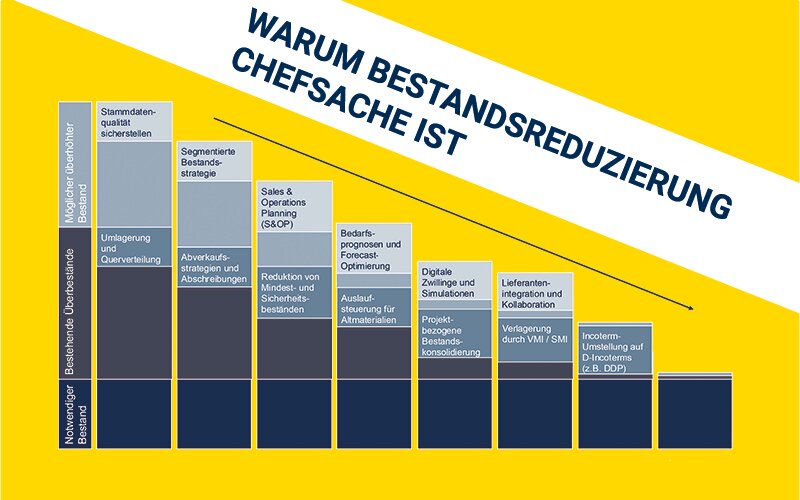
To keep your inventory under control, you need more than just isolated measures – you need transparency, networking, and foresight. “The first step is to obtain a comprehensive view of material flows and inventories,” says Christian Schaller. Modern systems such as control towers and KPI dashboards with key performance indicators show where capital is tied up or bottlenecks are looming. The LOGSOL team also works with digital twins and AI-supported forecasts, because “they significantly increase planning accuracy,” emphasizes the Principal of Logistics and Factory Planning and adds: “When sales, production, purchasing, and logistics work together, fluctuations can be identified early and capacities can be used efficiently.” In his opinion, close partnerships with suppliers and flexible contract models make supply chains more resilient while also reducing capital expenditure.
LOGSOL delivers strategy instead of piecemeal solutions
Successful inventory management strikes a balance between short-term response and long-term structure. Using a tried and tested two-pronged strategy, LOGSOL combines proactive measures such as clean master data, AI forecasts, and supplier integration with reactive steps such as stock transfers, sales, and lower safety stocks.
“When we show them the total inventory costs, many people have an ‘aha’ moment,” says Christian Schaller. After all, inventories not only tie up capital, but they also take up storage space, cause write-offs, and paralyze processes when parts are missing. Only those who understand these interrelationships can act in a targeted manner and set priorities correctly. “Companies that actively manage their inventories strengthen their liquidity, resilience, and competitiveness,” he summarizes.
Inventories are therefore much more than just stock figures – they are strategic capital that determines stability and success: “LOGSOL supports this transformation process – with methods, data, and practical experience.”