
LOGSOL sets standards for material logistics in clean rooms
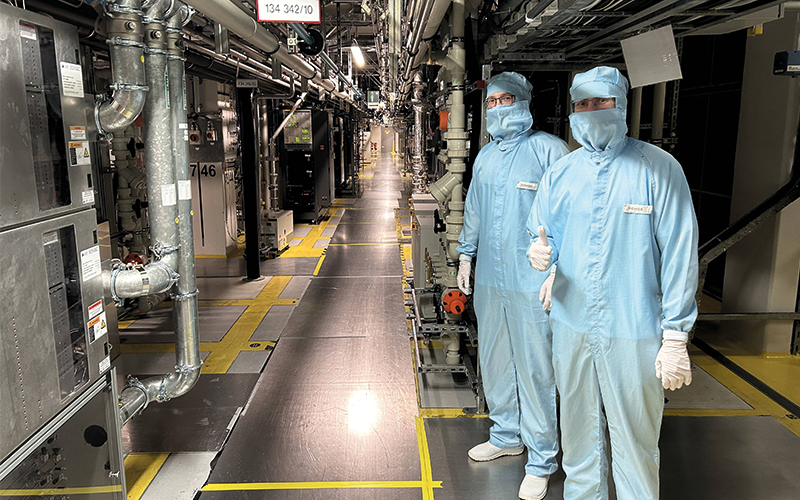
In “Silicon Saxony”, sustainable European supply chains for microelectronics are being created. A leading manufacturer is expanding its capacities and will manufacture in a new high-tech plant in the future. Marcel Richter and Markus Störzel from LOGSOL were working in the navigation center of the new factory, the clean room. With their extensive expertise, the logistics and factory planners have been developing sophisticated supply chain and production processes for years, this time directly in a highly sensitive production environment. Marcel Richter enjoyed the challenge of “proving that we can set standards even in critical environments”.
Phase I: More than 10,000 material movement data entries analyzed
Against this background, Markus Störzel outlines the challenging task: “The predominantly manual activities involved in supplying spare parts for the machines needed to be modernized and optimized.” The company was looking for an innovative solution that would control and automate material transport for the maintenance process in line with requirements. Until now, employees have been manually bringing parts through material locks into the “sacred halls” and transporting them to the systems there. Conversely, removed parts are returned for preparation.
In January 2025, LOGSOL’s logistics and factory planners start collecting and analyzing data. The challenge is to get to grips with the vast amounts of data and identify dependencies. For two months, Marcel Richter and Markus Störzel examine Excel lists containing more than 10,000 material movement data entries, accompanied by numerous discussions in various departments. “It was important not to leave anyone behind, to get everyone on board,” says Markus Störzel. Because most of the areas to be planned have not yet been built, LOGSOL has to “question and merge different concepts”.
Phase II: Business model developed for AGVs as preferred technology
Automated Guided Vehicles (AGVs) are emerging as the preferred technology. In the final comparison of variants, the LOGSOL team evaluates three concepts, including manual alternatives, and developes a business case model with various influencing factors. Over the course of the project, the specialists demonstrate that AGVs deliver significant cost advantages. Among the challenges that still need to be addressed are the lane widths in the clean room.
The collaboration with LOGSOL has provided the customer with a great deal of guidance and transparency. When faced with a complex problem, it proved very beneficial for the company to bring in targeted, in-depth external expertise. With their solid profitability calculations, the logistics planners are making a decisive contribution to the manufacturer’s location strategy in Saxony.