
Efficient growth: Logistics optimisation for e-commerce scale-ups, using Wunderwunsch as an example
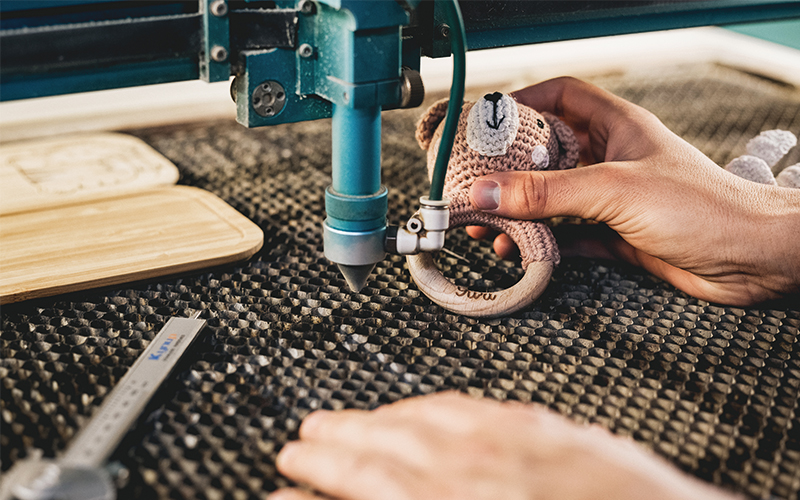
As a logistics planner at LOGSOL, Christoph Knippschild knows all about space efficiency. He enjoys developing customized solutions for industry-specific challenges – as in the case of Wunderwunsch in Coswig, Saxony. From cozy blankets embroidered with babies’ names to personalized school bags, the 50 employees in the manufactory produce many special children’s products. Within five years, the start-up has grown into a scale-up, and the workspace resembles a crowded children’s room: “Storage, logistics, packaging, and production are currently disorganized. There is little potential for further growth,” says co-founder and managing director Toni Lösche. In technology-specific departments such as laser engraving or digital printing, products are manufactured and prepared for shipping. Directly next to the machines are areas for pallets or small parts, which are supplied from an external picking warehouse. Since the system has reached its capacity limits, Wunderwunsch contracted LOGSOL to organize processes that were created with passion and to unlock potential.
Toolkit with concepts and strategies
To make processes more efficient and create room for growth, Knippschild has a well-assorted toolkit of innovative concepts and tried-and-tested strategies at his disposal. “We want to avoid idle time between production and logistics and create transparency,” says the e-commerce specialist, outlining the goal. Intralogistics at Wunderwunsch is complex: Items pass through machines with varying production times before being consolidated and prepared for shipping. “We have started to digitally document, track, and actively control the workflow,” says Knippschild.
During his analysis, the expert determined that shipping reaches its physical limits when capacity utilization is high: “It is not possible to set up more packing tables.” Although the employees work quickly, there are problems with the feeding. “Just like on an assembly line, the work area must be kept clean, tidy, and reliably supplied,” emphasizes Knippschild. According to him, “creating transparency about the upstream processes” is the key. This means knowing when which products are ready on which machine and when they can be consolidated and packed. It’s about combining efficiency and effectiveness: “Effective means packing what has to go out today. Efficient means controlling processes in such a way that nothing has to be handled twice,” he explains.
Workflow manager scans, software prioritizes
Transfer points were set up in production to shorten walking distances. Knippschild defined the new key position of a “workflow manager,” designed the training process, and created an initial software interface. The workflow manager scans finished items at the transfer points and places them in containers specified by the system. Instead of having employees do the manual sorting, the software decides which goods go to shipping and with what priority.
“Tidy-up coach” Christoph Knippschild ensured that the available space was used more efficiently. Lösche is satisfied: “Otherwise, growth would only have been possible with more staff and additional space – at significantly higher costs.”
Cooperation with added value
The successful collaboration between LOGSOL and Wunderwunsch extends beyond joint logistics projects: For the summer event ‘LOGSOL Summit 2025’, Wunderwunsch’s manufactory produced high-quality lunch boxes for all LOGSOL employees – made of metal with a bamboo lid, into which the company logo was precisely engraved. They combine durability, functionality, and attractive design – values that both companies share.